
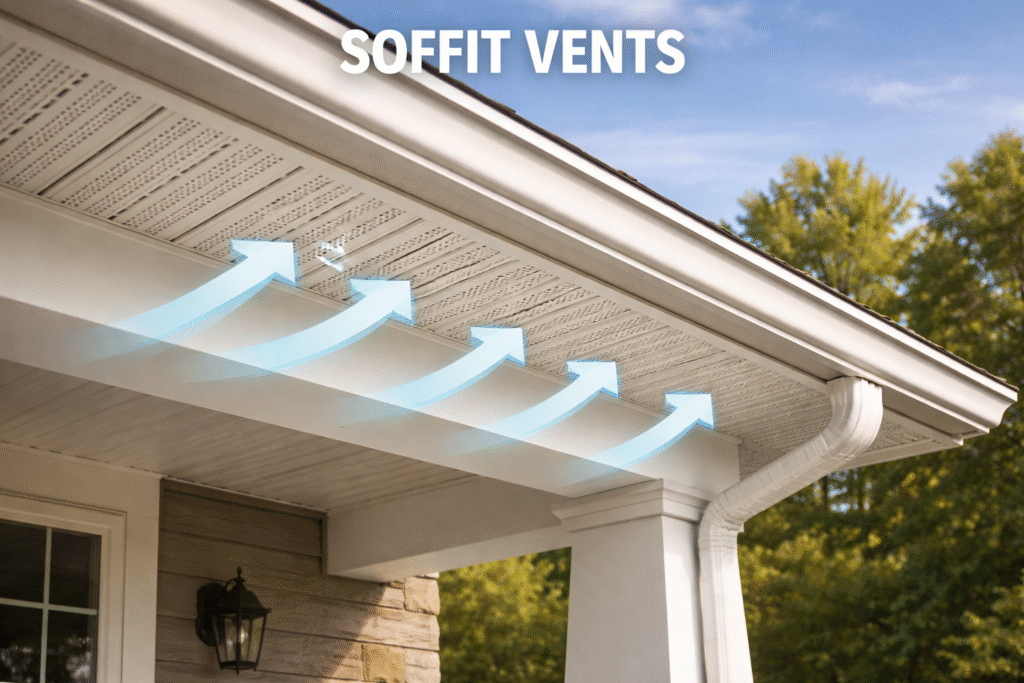
Soffit vents are one of the most important yet often overlooked parts of a healthy roofing and attic system. When homeowners ask what is a soffit vent, what are soffit vents, or what’s a soffit vent, they are really asking how fresh air gets into the attic and why that matters for comfort, energy efficiency, and roof performance.
In this full guide we will explain soffit vents for roof systems, how they work, installation and spacing details, maintenance tips, common questions like “are soffit vents a good idea?”, what to do if your roof has no soffit vents, and how to combine soffit vents with other attic ventilation systems.
Soffit vents are critical because they are the “intake” part of attic ventilation. Without proper intake, hot and moist air can build up in your attic, damaging insulation, increasing energy bills, and reducing roof life. Understanding soffit ventilation helps you protect your home from preventable problems and makes it easier to plan upgrades or repairs.
What Is a Soffit Vent Definition and Meaning
Soffit vents are ventilation openings located in the soffit, the underside of the roof eave where the roof meets the exterior wall. These small vents allow air to enter the attic space from beneath the roof overhang.
Other common ways people search for this topic include:
- what is soffit vent
- what are soffit vents
- what’s a soffit vent
- vent in soffit
- soffit roof vents
- roof soffit vents
- soffit vents attic
- soffit attic vent
All refer to the same core component a vent that brings air into the attic.
Soffit vent meaning is simple: they are passive intake vents designed to improve attic air flow by letting fresh air in from the lowest part of the roofline.
Why Soffit Vents Matter
Soffit vents are not decorative they prevent serious issues in the home by enabling consistent airflow throughout the attic. Without soffit vents, heat and moisture can accumulate, leading to:
- Warped sheathing
- Mold and mildew growth
- Ice dams in winter
- Inefficient insulation performance
- Increased cooling and heating costs
Roof soffit vents are essential for long‑term attic health. Proper attic air flow maintains roof structure integrity and makes your home more energy efficient.
How Do Soffit Vents Work
Understanding attic airflow helps explain why soffit vents work.
Airflow in attic ventilation operates on a simple principle: cool air enters low and warm air exits high. Soffit vents bring fresh outside air into the attic. That air then rises warmed by attic temperatures and exits through ridge vents, gable vents, or other attic exhaust vents.
Here are common related searches:
- how do soffit vents work
- how does soffit venting work
- soffit ventilation system
- soffit venting
Without intake ventilation like soffit vents, an attic ventilation system cannot function efficiently.
Soffit Vents and Ridge Vents
The modern best practice is to combine soffit vents with ridge vents. Ridge vents are located at the peak of the roof and allow hot air to escape. Fresh air enters through the soffit vents below, creating a balanced airflow pattern often referred to as “stack effect.”
Are Soffit Vents Necessary
A very common homeowner question is are soffit vents necessary or does soffit need to be vented. The short answer: in nearly all attic systems, yes.
Ventilation balances attic temperature and moisture. Soffit vents are the primary intake source. Without them, exhaust vents cannot function properly, leading to stagnant air, higher energy costs, and potential structural harm.
Types of Soffit Vents
There are several soffit vent styles:
- Continuous strip soffit vents – run the length of the soffit
- Individual soffit vents – spaced vents, usually rectangular
- Under eave soffit vent with screen – protects against pests while allowing airflow
- Vented soffits – vented panels integrated into soffit systems
- Vinyl soffit ventilation – common in modern siding and soffit systems
These variations help builders match performance and aesthetics. Proper vent spacing ensures the attic gets consistent intake air.
Soffit Vent Installation and Details
Professional installation ensures proper performance.
Roof Soffit Vent Installation
Soffit vents must be installed where they can draw fresh outside air into the attic. Correct placement includes:
- Even spacing along soffits
- Clear air channels above insulation
- Proper connection to attic air space
Installing soffit vents often involves cutting openings into existing soffit panels and adding screens to keep out insects and rodents.
How to Install Vents in Soffit
While some advanced DIY homeowners attempt soffit vent installation, improper spacing or placement can worsen ventilation rather than improve it. A professional roofer understands how to size vents according to attic square footage.
How Many Soffit Vents Do I Need
The number of vents depends on attic size and other venting elements. As a rule of thumb, manufacturers and building codes recommend specific net free vent area (NFVA) ratios. A professional can calculate precise requirements.
Soffit Vent Spacing and Requirements
Incorrect soffit vent spacing can create pockets of stagnation rather than even airflow. Proper spacing ensures that air enters uniformly across the attic breadth. This even intake protects insulation and prevents hot spots.
Maintenance and Troubleshooting Soffit Vents
Soffit vents are low maintenance but not maintenance‑free.
Common Issues
- Blocked vents: insulation can creep up and block airflow.
- Pests: rodents, birds, and insects can nest around vents.
- No air coming out of vents: indicates a blockage or lack of exhaust ventilation.
Related searches include:
- clean soffit vents
- how to clean soffit vents
- soffit vents blocked by insulation
- insulation blocking soffit vents
- no air coming out of vents
- cleaning soffit vents
How to Clean Soffit Vents
Cleaning soffit vents is relatively simple: remove debris, clear spider webs, and ensure there is airflow to the attic. A leaf blower or vacuum works well in many cases.
Attic Ventilation and Soffit Vents
Soffit vents are a key part of attic ventilation systems. When combined with ridge or gable vents, they ensure:
- Balanced airflow
- Reduced attic temperatures
- Lower cooling costs
- Minimized moisture buildup
People often search:
- attic ventilation soffit vents
- soffit vents attic ventilation
- proper attic ventilation
- attic ventilation options
- types of attic ventilation
- best way to ventilate an attic
Soffit vents are the intake others are exhaust and both are necessary for effective ventilation.
Soffit Vents and Roof Combinations
Homeowners also compare soffit vents with other roof vent types:
- soffit vents and ridge vents
- ridge vent without soffit vents
- ridge vent no soffit
- soffit gable vents
- gable vents and soffit vents
- do I need soffit vents if I have gable vents
- gable vents with soffit vents
Most roofing professionals recommend combining soffit vents with ridge or attic vents for balanced airflow.
Venting Solutions Without Soffits
Not all roofs have soffits. Some homeowners ask:
- venting attic without soffits
- how to vent attic without soffit vents
- roof intake vent no soffit
- ridge vent without soffits
- soffit alternatives
Alternative intake vents include gable vents, roof‑mounted vents, or specially designed vents that don’t rely on soffits.
Common SOFFIT VENT Problems & Solutions
Some issues can arise when soffit vents aren’t functioning correctly:
Attic Not Vented
This usually means no clear airflow path. Adding intake and exhaust vents solves the imbalance.
Moisture in Attic
Moisture can condense and cause rot, mold, or insulation damage. Soffit vents combined with exhaust vents reduce humidity.
Rain or Snow Entry
Proper soffit vent design includes baffles and screens so water cannot get in during storms.
Frequently Asked Questions
Are Soffit Vents a Good Idea?
Yes. They provide essential intake ventilation that prevents heat and moisture buildup.
What If My Roof Has No Soffit Vents?
Alternative venting solutions are needed. Ridge vents alone cannot pull air in efficiently without intake.
Can You Vent a Bathroom Fan Through a Soffit Vent?
No. Bathroom exhaust should be vented outside the home envelope, not directly into a soffit vent.
Can Mice Get in Through Soffit Vents?
If not properly screened, pests can enter. Screens prevent wildlife intrusion.
Do Soffit Vents Make a House Colder in Winter?
Proper attic ventilation reduces attic temperature extremes but does not make living spaces colder.
Can Water Get in Through a Soffit?
Well‑designed soffit vents with screens and baffles prevent water entry even in severe weather.
Do I Need a Soffit Vent Between Every Rafter?
Not necessarily. Proper spacing based on NFVA is more important than vent‑per‑rafter placement.
How Much Does It Cost to Add Soffit Vents?
Costs vary based on roof size and access. A professional quote is best.
What Is the Cheapest Way to Vent an Attic?
Good attic ventilation requires both intake and exhaust vents. DIY options exist, but improper installation may cause more harm.
Conclusion and Professional Support
Soffit vents are far more than simple holes in fascia they are the intake lifeblood of a healthy attic ventilation system. Understanding what soffit vents are, how they work, and why they matter helps homeowners make better decisions and protect their investment.
If you are planning soffit vent installation, maintenance, or a full attic ventilation assessment, our experienced professionals at Ever Roof can help guide you to the right solution for your home.
Contact us for expert roofing and ventilation support The Ever Roof :