When planning a new roof or roof replacement, one of the biggest questions homeowners ask is how long do metal roofs last. Metal roofing has become popular because of its durability, longevity, and low maintenance, but exactly how long you can expect it to protect your home depends on the type of metal used, installation quality, and environmental factors. In this detailed guide, we’ll break down the lifespan of steel roofs, tin roofs, and metal shingles, compare metal roofs to traditional shingles, answer important homeowner questions like do metal roofs leak a lot, are metal roofs worth it, and does a metal roof increase home value in Canada, and give practical insights to help you make the right choice for your home.
What Is a Metal Roof and Why Longevity Matters
A metal roof is a roofing system made from steel, aluminum, tin, copper, zinc, or other metal alloys. Metal roofing panels or shingles are known for their resistance to corrosion, fire, wind, and weather damage, making them some of the longest‑lasting roofing materials available. Wikipedia
Understanding how long a metal roof lasts is critical because roofing is one of the most expensive home improvements you’ll make. A roof with a longer lifespan not only saves on long‑term repair and replacement costs but can also improve energy efficiency, curb appeal, and resale value.
Material‑Specific Lifespan (Subsections)
How Long Do Steel Roofs Last
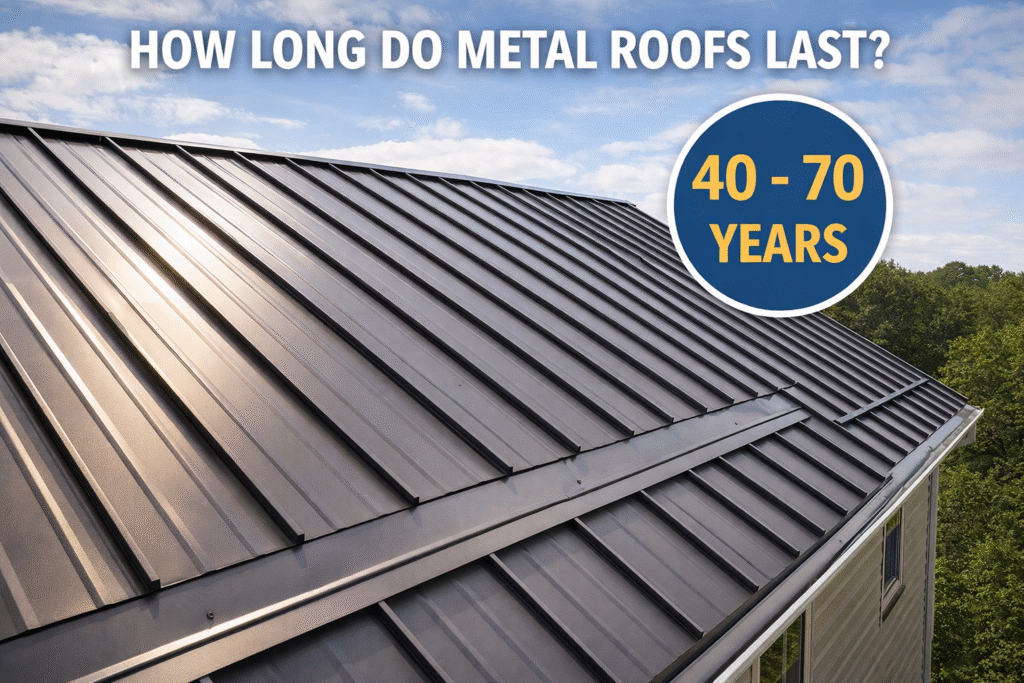
Steel roofing is one of the most common metal roofing types for residential homes. On average, steel roofs last between 40 and 70 years, depending on the coating, maintenance, and climate conditions. Titan Roofing Solutions
Steel is often coated with zinc (galvanized) or aluminum‑zinc blends to resist corrosion. Proper installation and periodic inspections help ensure the steel roof reaches the upper range of its expected lifespan. In regions with harsh winters or frequent storms, quality coatings and professional installation make a big difference in how long a steel roof will last.
How Long Does a Tin Roof Last
Although tin roofing historically references older roof materials, today’s modern equivalents (often tin‑coated steel) are still durable. Pure tin roofs or tin‑coated metal roofs can last 40 to 70+ years if properly maintained and protected from corrosion over time. Wikipedia
Pure tin alloys may offer corrosion resistance but require good surface protection and quality coatings to reach the longest lifespans. When installed and maintained correctly, a tin roof can last decades and often outlast related shingle systems.
How Long Do Metal Shingles Last
Metal shingles provide the look of traditional roofing materials like slate or wood, with the durability of metal. Metal shingles typically last 40–70 years, depending on the base metal (steel, aluminum, or coated alloys) and environmental exposure. Brava Roof Tile
Metal shingles benefit from high‑quality coatings that resist fading, corrosion, and UV damage, helping them approach the upper range of lifespan estimates.
Metal Roof vs Shingles Life Expectancy
When considering metal roof vs shingles life expectancy, metal roofs clearly lead the way. Asphalt shingle roofs typically last 15–30 years, whereas metal roofing systems commonly last 40–70 years or more. Brava Roof Tile+1
| Roof Type | Average Lifespan |
|---|---|
| Metal Roof | 40–70+ years |
| Asphalt Shingles | 15–30 years |
| Wood Shakes | 20–50 years |
| Tile or Concrete | 50–100 years+ |
This extended lifespan means a metal roof may be the last roof you ever install on your home, and replacing shingles multiple times over decades can often cost more in the long run.
Factors That Affect a Metal Roof’s Lifespan
Several factors influence how long a metal roof will last:
1. Material Quality and Type
High‑end metals like copper and zinc can exceed 70–100 years under ideal conditions, while standard steel panels usually offer 40–70 years. Englert
2. Installation Quality
Proper installation by experienced roofers ensures panels fit correctly, fasteners are secure, and sealants are effective, all of which extend lifespan.
3. Climate and Weather Exposure
Regions with heavy snowfall, hail, or strong UV exposure can impact roof life, though metal roofs generally perform better than most alternatives.
4. Maintenance
Routine inspections and repairs help catch minor issues before they become major problems, keeping your roof performing at its peak.
5. Coatings and Paint Systems
High‑quality finishes with UV‑resistant coatings or protective paint systems help prevent corrosion and fading, extending roof life.
Frequently Asked Homeowner Questions
What Are the Disadvantages of a Metal Roof?
While metal roofs are extremely durable, they do have some drawbacks:
- Higher upfront cost than asphalt shingles
- Can be noisy during heavy rain without proper insulation
- May dent from very large hailstones or heavy impact
- Improper installation can lead to leaks or seam issues Farm Bureau Financial Services
Despite these concerns, many homeowners find the long‑term benefits outweigh these challenges.
How Often Should You Replace a Metal Roof?
Because metal roofs often last 40–70 years or longer, most homeowners only replace them once in a home’s lifetime. With proper maintenance, they may not need replacement at all. Regular inspections every few years help you understand when minor repairs are needed before reaching the end of life.
Do Metal Roofs Leak a Lot?
When properly installed, metal roofs do not leak excessively. Leaks typically occur due to improper sealing around roof penetrations, lack of maintenance, or incorrectly installed flashing around chimneys, vents, or valleys. Quality installation significantly reduces this risk.
Does a Metal Roof Increase Home Value in Canada?
Yes. Because metal roofs are long‑lasting, energy‑efficient, and low maintenance, they can increase home value and enhance curb appeal, especially in regions like metal roofing Ontario where weather exposure can demand durable roofing. Interlock Metal Roofing
Metal roofing’s reputation for longevity and performance often makes homes more attractive to buyers in areas with harsh winters and temperature extremes.
Pros and Cons of Metal Roofing
Pros
- Outstanding lifespan compared to traditional roofing
- Excellent resistance to wind, fire, corrosion, and weather damage
- Energy efficiency and reflective properties
- Minimal maintenance once installed State Farm
Cons
- Higher installation cost
- Potential for noise during rain or hail without proper insulation
- Installation quality heavily impacts performance
Metal Roofing in Ontario and Cold Climates
In places like metal roofing Ontario, taking climate into account is key. Metal roofs in Canada need to withstand snow, ice, temperature swings, and salt exposure in winter. With proper materials and installation, however, metal roofs still deliver impressive life expectancy often exceeding 40 years with regular maintenance. Interlock Metal Roofing
Conclusion and Expert Roofing Support
Metal roofs are one of the longest‑lasting roofing solutions available. With lifespans typically ranging from 40 to 70+ years, and some premium materials lasting even longer, they often out‑live traditional roofing systems while offering better durability and performance. Whether you choose steel, tin, or metal shingles, understanding expected lifespan helps you plan for long‑term protection and value.
If you’re considering a metal roof, need an expert inspection, or want professional advice on the best roofing option for your home, Ever Roof is here to help.
Get your roof evaluated by professionals today The Ever Roof