
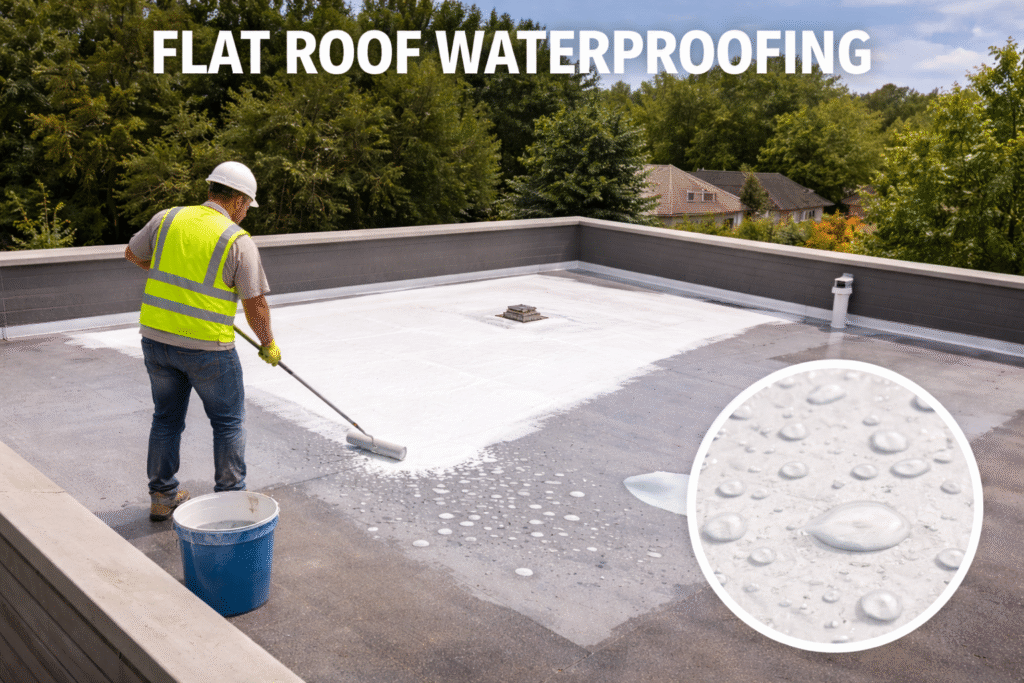
Flat roof waterproofing is essential for protecting your building from leaks, ponding water, and structural damage. Whether you need to waterproof a flat roof, waterproofing for roofs, or want to know how to waterproof a flat roof, this guide covers everything you need to understand from proven waterproofing methods and materials to costs, maintenance, and real world decision‑making strategies.
Water will always find the weakest point in a roof system. Proper flat roof waterproofing ensures that moisture stays out of your home or commercial space, increases roof lifespan, and reduces long‑term repair costs. We’ll explain the best waterproofing products, how they work, how to maintain a waterproof roof, and answer common homeowner questions like:
- What is the best way to waterproof a flat roof?
- How often should a flat roof be resealed?
- Is rubber or felt better for a flat roof?
- Can I seal a flat roof myself?
Let’s dive in.
What Is Flat Roof Waterproofing
Flat roof waterproofing refers to the suite of techniques, materials, and systems used to create a water‑tight barrier on a flat roof surface. Unlike pitched roofs, flat roofs do not shed water quickly, so waterproofing solutions must be robust enough to handle standing water and weather exposure.
Flat roof waterproofing involves:
Application of membranes that block water
Waterproof coatings and sealants to protect seams
Attention to details around drains and penetrations
Regular inspection and maintenance
Because flat roofs are inherently more susceptible to sitting water, they require waterproofing solutions that are flexible, durable, and long‑lasting.
Why Waterproofing a Flat Roof Matters
Many flat roof failures start with small cracks, leaks around flashing, or water penetration at seams. Effective waterproofing:
✔ Prevents interior water damage
✔ Limits mold and mildew growth
✔ Increases roof lifespan
✔ Reduces energy costs
✔ Protects insulation and structural elements
Ignoring waterproofing can lead to costly repairs and early roof replacement.
Best Products & Materials for Flat Roof Waterproofing
Choosing the right product is one of the most important parts of any waterproofing project. Below are common solutions broken down by category.
Waterproofing Membranes for Flat Roofs
Waterproofing membranes are the foundation of many flat roof systems:
- Single‑ply membranes such as EPDM, TPO, and PVC
- Built‑up roofing (BUR) layers
- Modified bitumen sheets
Membrane roofing provides a continuous, seamless barrier that prevents water intrusion even in ponding areas.
Best Flat Roof Coatings and Sealants
Roof coatings protect the surface and extend waterproofing life.
Top options include:
- Acrylic coatings – UV resistant and reflective
- Silicone coatings – excellent for ponding water areas
- Polyurethane coatings – highly durable against foot traffic
- Roof waterproof coating paint – adds a protective film
These coatings are often combined with membranes for a comprehensive solution.
Best Roof Waterproofing Coating and Sealants
When selecting coatings or sealants, you want products that:
✔ Bond permanently to the substrate
✔ Resist degradation from UV and weather
✔ Move with the roof material
✔ Provide long‑term protection
Examples of strong options used by professionals include high‑grade silicone and polyurethane coatings designed for flat roofs.
Roofing Waterproofing Methods
There are three main waterproofing approaches:
1. Membrane Waterproofing
Best for long‑lasting protection. Installed in large sheets to create a continuous barrier.
2. Liquid Applied Coatings
Applied like paint, liquids cure into a seamless membrane. These are excellent for irregular surfaces.
3. Built‑Up Roofing (BUR)
Traditional method with multiple layers of asphalt and felts for waterproofing strength.
Each method has its place depending on budget, roof age, and expected lifespan.
Sealers, Coatings & Paint for Flat Roofs
Now let’s break down the coating and sealant options in detail.
Flat Roof Sealant and Sealer Guide
Sealants fill cracks, seams, and transitions where membranes or coatings meet roof elements. They are crucial for:
- Around roof drains
- Flashing seams
- Roof edges
- Penetrations such as vents
A high‑quality flat roof sealant prevents leaks where water is most likely to intrude.
Flat Roof Coating Systems
Coating a flat roof gives you a secondary waterproof layer. Key products include:
- Flat roof coating kits
- Silicone roof coatings
- Acrylic roof paints
- Elastomeric coatings
These coatings protect membranes and substrates from UV, water, and wear.
Flat Roof Waterproofing Paint
Painting a flat roof with waterproof paint adds an extra layer of defense. While paint alone is not enough for waterproofing in severe climates, it complements other systems.
Flat Roof Repair & Leak Fixes
Even the best waterproof roof can develop leaks over time. Common solutions include:
- Flat roof patching systems
- Flat roof repair kit products
- Flat roof sealing around leaks
- Resealing flat roof seams
Repair products often include rubberized sealants or patch membranes that adhere directly to damaged areas.
How to Seal a Flat Roof
Sealing a flat roof generally involves:
Cleaning the surface
Applying primer if recommended
Applying sealant around seams and penetrations
Spreading waterproof coating or membrane
Careful preparation determines long‑term performance shortcuts lead to early failure.
Flat Roof Waterproofing Maintenance & Troubleshooting
To maximize life expectancy:
Regular Inspection
Look for cracks, bubbles, separation, or ponding water.
Cleaning
Debris can trap moisture and accelerate deterioration.
Resealing
Edges and seams may require periodic resealing every few years depending on climate.
Understanding how often to reseal a flat roof helps maintain performance and prevents costly issues.
Waterproofing Flat Roof Decks and Special Surfaces
Flat roofs with decks or concrete surfaces often require specialized waterproofing:
- Best waterproofing for concrete roof solutions
- Deck waterproofing membrane systems
- Protective coatings for rooftop patios
Concrete roofing can expand and contract differently than membranes, so products must be flexible.
DIY vs Professional Waterproofing
Can I Waterproof a Flat Roof Myself?
DIY waterproofing is possible for small repairs or maintenance. Common homeowner tasks include:
Applying sealant around leaks
Cleaning drains
Touching up coating
However, full membrane installation or major waterproofing systems are best handled by professionals due to technical precision required.
Flat Roof Waterproofing Pros and Cons
Every method has advantages and limitations:
Pros
Enhances roof lifespan
Minimizes leaks
Reduces interior damage
Improves energy efficiency with reflective coatings
Cons
Upfront cost can be higher
Some systems require professional installation
Repair may require specialized products
Common Homeowner Questions
What Is the Best Way to Waterproof a Flat Roof?
The best way depends on roof condition but usually combines a membrane plus protective coating.
How Often Should a Flat Roof Be Resealed?
Typically every 5‑10 years depending on climate and coating type.
What Are the Different Types of Waterproofing for Flat Roofs?
Main types include membranes, liquid coatings, and BUR systems.
Is Rubber or Felt Better for a Flat Roof?
Rubber (EPDM) is durable and weather resistant; felt‑based systems are traditional but often less flexible.
How Much Does It Cost to Coat a Flat Roof?
Costs vary by method but professional coatings are often more cost effective long term.
Can I Install a Waterproofing Membrane Myself?
DIY installation is not recommended for full membrane systems due to technical requirements.
Does Flex Seal Work on Flat Roofs?
Flex Seal may provide short‑term waterproofing for small areas but is not a substitute for professional membranes or coatings.
What Is the Most Durable Roof Waterproofing?
Membrane systems such as TPO, PVC, and high‑grade EPDM are among the most durable solutions.
Conclusion and Professional Support
Flat roof waterproofing is not just a surface treatment it’s a system. Whether you’re waterproofing a flat roof, choosing the best flat roof coating, or planning ongoing maintenance, high‑quality materials and proper installation are critical. A well‑executed waterproofing strategy prevents leaks, extends roof life, and protects your investment.
If you need expert advice, professional waterproofing services, or an inspection to assess your roof’s condition, our roofing team at Ever Roof is here to help.
Contact us today The Ever Roof for dependable waterproofing solutions: